
Top Remote Leadership Jobs: Secure Your Senior Role in 2026
By Adam James
You're probably seeing the same pattern in senior searches right now. The title says remote. The recruiter says flexible. Then the screening call reveals “U.S. only,” quarterly travel that turns into monthly travel, core hours that swallow your morning or evening, or a compensation band that changes the moment you mention where you live.
That's the part generic advice misses. At leadership level, remote work isn't a perk. It's an operating model with constraints, politics, and cost decisions underneath it. If you're pursuing remote leadership jobs in 2026, your edge won't come from applying faster. It will come from reading the role like an operator, not a hopeful candidate.
Senior remote hiring is still substantial, but it's no longer a land grab. A 2025 benchmark reported 5.8 million remote jobs were posted in 2024, down 20.5% from 2023, which points to a tighter market that rewards sharper positioning and better filtering rather than mass applications (remote work benchmark on posted remote jobs). That's why experienced leaders often feel stuck. The market is real, but the signal is buried under vague listings and mismatched cultures.
The New Landscape of Remote Leadership
The first distinction that matters is remote-first versus remote-friendly.
A remote-first company builds management, communication, documentation, and decision-making around distributed work. A remote-friendly company often started with an office mindset and later allowed some roles to work from home. Both can hire remote leaders. Only one usually sets them up to succeed.
Know which model fits your leadership style
Use a quick self-audit before you apply.
- Choose remote-first if you're strong in written communication, comfortable making decisions asynchronously, and you prefer structured operating rhythms over hallway consensus.
- Choose remote-friendly if you do your best work with periodic in-person influence, you want some office access for key stakeholders, or your leadership style relies more on live alignment than deep documentation.
- Pause if you're calling any role “remote” without defining your own essential criteria. That's how senior candidates end up in jobs that look flexible and operate rigidly.
A lot of frustration in this market comes from applying to the wrong remote model, not the wrong title.
Read the market for what it is
The expansion phase has cooled. The market has stabilized after the post-2020 acceleration, and that changes candidate strategy. Broad demand still exists, but employers are making more deliberate decisions about location, team design, and leadership scope.
Practical rule: Don't treat remote leadership jobs as a separate category. Treat them as senior operating roles with a distributed delivery layer.
That means your search should be narrower, not wider. Filter for business model, team geography, reporting line, and decision rights before you worry about title. If you want a broad starting point, use a curated set of worldwide remote jobs to see how employers label geography and flexibility, then refine from there.
Define Your Remote Leadership Brand and Target
Most senior candidates undersell themselves in remote searches because they present office-era leadership stories in office-era language. The market doesn't reward “managed a team of” or “led cross-functional initiatives” on its own. It rewards evidence that you can create clarity, momentum, and accountability without relying on physical proximity.
The underlying demand is durable. In 2025, about 32.6 million Americans worked remotely, representing 22% of the U.S. workforce, and preference data showed about one-third of remote-capable employees prefer a fully remote arrangement. For senior candidates, that means companies still need leaders who can run distributed teams well. They're just less forgiving about vague positioning.
Build a brand around operating value
Your remote leadership brand should answer three questions fast:
- What environment do you lead best in
- What business problems do you solve
- How do you run teams when people aren't in the same room
That third point is where most profiles collapse. They claim adaptability instead of showing operating mechanics.
A stronger framing sounds like this:
- Weak positioning: “Experienced VP with a track record of scaling teams.”
- Better positioning: “Product and operations leader who scales distributed teams through clear decision cadences, documented ownership, and outcome-based performance management.”
The second version tells a hiring manager how you work.
Rewrite your headline and resume language
Here's what that looks like in practice.
LinkedIn headline before
Senior Engineering Leader | People Manager | SaaS Executive
LinkedIn headline after
Senior Engineering Leader for Distributed Teams | Builds clear execution rhythms, cross-time-zone alignment, and outcome-driven delivery
Resume bullet before
Led product and engineering teams across multiple departments.
Resume bullet after
Led distributed product and engineering teams across functions, introduced written decision protocols and clearer ownership handoffs, and reduced dependence on live meetings for execution.
Resume bullet before
Improved team communication and project visibility.
Resume bullet after
Standardized update formats, decision logs, and weekly operating reviews so stakeholders could track priorities without waiting for ad hoc meetings.
Define your target company before your target title
A strong search starts with fit criteria, not title inflation. Build your target around:
- Operating cadence: Does the company rely on written updates, recurring reviews, and documented decisions, or does everything happen in meetings?
- Geographic design: Is the team clustered in one region, spread across a few time zones, or globally distributed?
- Leadership expectation: Are you being hired to supervise, to scale a function, to rebuild process, or to represent the function with executives?
- Remote maturity: Does remote work shape the company's management system, or is it a policy exception?
The best remote leadership candidates don't market themselves as “open to anything.” They sound specific enough that the right companies can recognize them immediately.
That specificity also protects you from bad-fit opportunities. If you need autonomy and asynchronous depth, a heavily meeting-driven culture will wear you down. If you prefer live collaboration, a highly distributed team with limited overlap may feel slow and isolating. Your brand should attract the right constraints, not just more recruiter outreach.
Optimize Your Profile for a Remote-First World
A recruiter reviewing senior remote candidates is trying to answer one question quickly: can this person lead with low drama and high clarity when everyone is distributed?
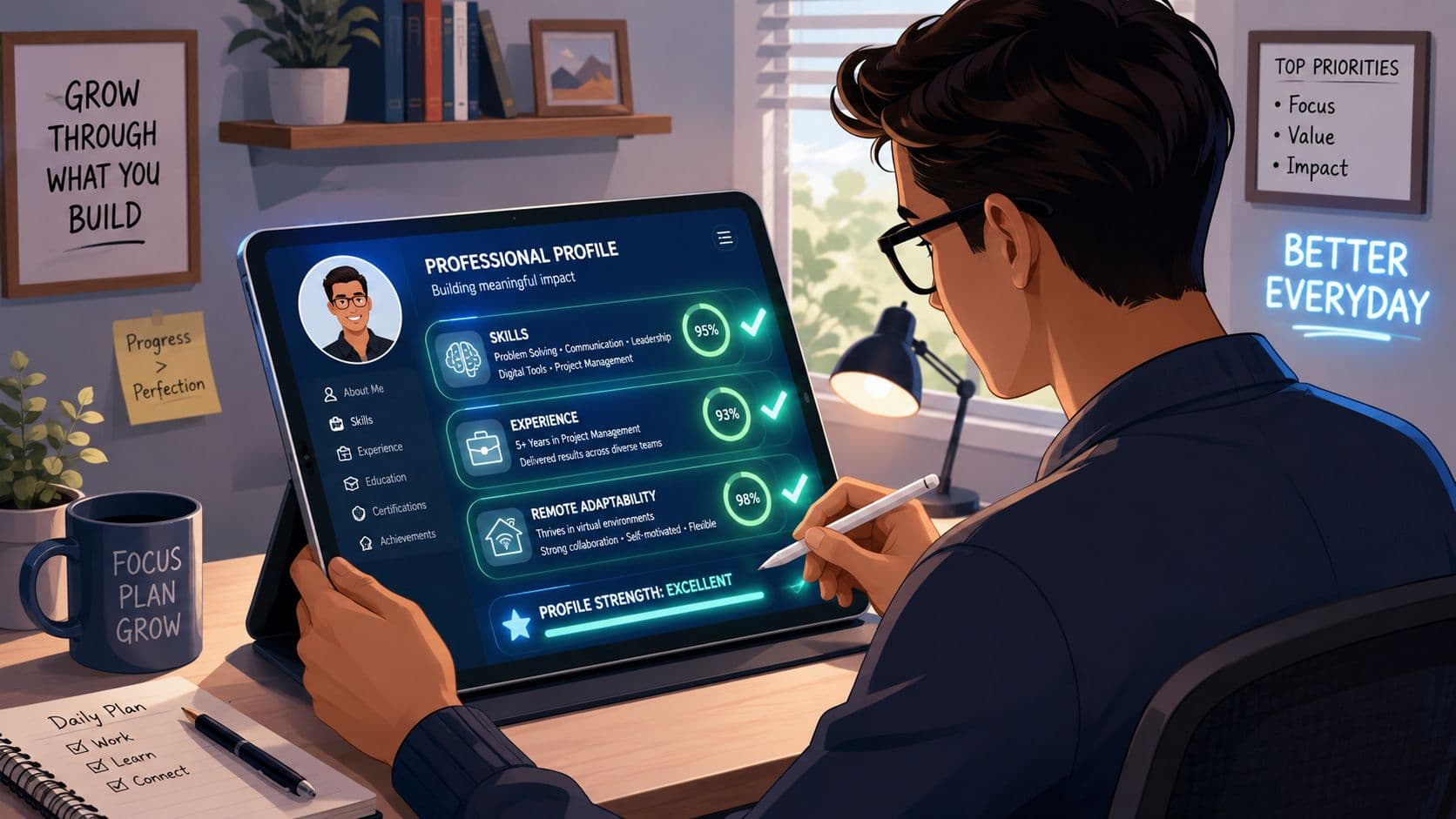
Your profile has to make that easy to see. Generic executive language won't do it. You need visible evidence of asynchronous communication, distributed execution, decision quality, and team operating discipline.
Show remote readiness in your profile summary
A strong summary doesn't just mention remote work. It translates your leadership into distributed terms.
Include language like:
- Asynchronous communication
- Cross-functional alignment across time zones
- Outcome-driven management
- Documentation-led execution
- Distributed team development
- Clear escalation paths
- Structured operating cadence
Avoid empty phrases like “excellent communicator” unless you explain how. Senior hiring teams assume every executive says that. What they want is proof that your communication system scales.
Turn accomplishments into distributed evidence
Here's the pattern I advise candidates to use:
| Standard achievement | Better remote-first framing |
|---|---|
| Managed a team of leaders | Led a distributed leadership team with clear decision ownership, recurring written updates, and defined escalation paths |
| Improved stakeholder communication | Replaced fragmented updates with a single operating rhythm for priorities, risks, and decisions |
| Drove execution across departments | Coordinated cross-functional delivery across time zones through documented dependencies and tighter handoffs |
This kind of rewrite does two jobs at once. It helps with search visibility, and it reassures human reviewers that you understand remote execution as a system.
Use sourcing and positioning together
A strong profile is only useful if it matches the jobs you're pursuing. If you're targeting senior product roles, review live examples like this remote director of product management role and compare the language in the listing against your headline, summary, and top bullets. You're not copying phrasing. You're checking whether your profile speaks the same operating language.
That's also where the red flags start to appear.
If the job description says remote but spends most of its detail on office rituals, executive presence on-site, or “flexibility to be in person when needed,” assume the company hasn't fully resolved how leadership works at a distance.
Decode fake remote language early
Look closely at wording such as:
- “Remote within commuting distance” often means eventual office pull.
- “Work from anywhere” may still hide payroll or legal restrictions.
- “Minimal travel” can become heavy travel in senior roles if no rhythm is defined.
- “Flexible hours” may still imply mandatory overlap with one dominant geography.
A polished profile helps you win attention. A skeptical reading habit helps you protect your time. You need both.
Source and Vet High-Quality Remote Opportunities
Senior candidates waste the most time at the top of the funnel. They pursue attractive titles before confirming whether the role is viable for their geography, compensation expectations, and leadership style.
That's avoidable if you source with discipline. One of the biggest gaps in remote hiring is geographic specificity. Many listings still say remote while tying the role to a region, employer location, or travel expectation (Indeed remote leadership listings illustrating location constraints).
Build a tighter sourcing mix
At leadership level, I'd use three channels in parallel:
- Curated remote listings for roles that already signal geography and seniority with more clarity
- Direct network outreach to former peers, functional leaders, and board-connected operators who know where remote hiring is real
- Selective direct approaches to hiring managers when your background is unusually aligned with a specific business problem
If your focus is product leadership, a curated collection of remote product manager jobs can help you see how serious employers define scope, geography, and function. Even if your exact title differs, the pattern recognition is valuable.
Vet the listing like an operator
When I review a remote leadership job with a candidate, I'm looking for hidden constraints in four places.
Location language
“Remote” isn't enough. Check whether the posting limits applicants by country, state, or tax jurisdiction.
Time-zone commitment
Some companies are happy with broad overlap. Others expect most of your day aligned to headquarters hours. For leaders, that distinction affects sustainability more than the remote label itself.
Travel reality
Executive offsites, quarterly planning, customer meetings, and board sessions may all sit behind a casual “some travel required” line. If they don't define frequency, ask.
Decision authority
A role can be fully remote and still badly structured. If you own outcomes without clear authority, you'll spend your time chasing alignment instead of leading.
“Remote” tells you where the laptop sits. It doesn't tell you how the company makes decisions.
What strong interviews often reveal
A typical senior remote interview loop exposes the truth if you listen carefully. In an early conversation, you may hear that the team is distributed “across several regions.” Good. Ask how planning works. If the answer is crisp, with set cadences, written materials, and clear ownership, the company likely understands distributed management. If the answer is fuzzy and revolves around “lots of touchpoints,” prepare for meeting bloat.
Later in the loop, a hiring executive may ask how you build culture remotely. A strong answer isn't about online social events. It's about operating trust, visible priorities, manager consistency, and how people get context without chasing it. If that lands well, you're speaking their language. If they keep drifting back to office symbolism, the role may be remote in policy and in-person in mindset.
Sample remote leadership job titles and key skills
| Job title | Typical responsibilities | Key skills to highlight |
|---|---|---|
| Director of Product | Set roadmap direction, align product with engineering and go-to-market teams, lead product managers | Written strategy, cross-functional prioritization, asynchronous decision-making |
| Head of Engineering | Scale delivery systems, manage engineering managers, improve execution quality | Distributed team leadership, technical planning cadence, hiring across geographies |
| VP of Customer Success | Own retention strategy, lead managers, coordinate support and revenue teams | Remote coaching, service operating rhythms, escalation design |
| Operations Director | Standardize processes, drive planning, improve cross-functional execution | Documentation, workflow design, accountability systems |
| Marketing Leader | Run campaign strategy, manage specialists and agencies, align with product and sales | Clear briefs, remote collaboration, outcome-based team management |
The red flags worth walking away from
Some listings don't deserve your time.
- Undefined geography: If the company won't state location limits clearly, expect surprises in process or offer stage.
- Heavy executive ambiguity: If travel, time-zone expectations, or in-office leadership moments are vague, they're probably still being negotiated internally.
- Culture by nostalgia: If the company keeps describing what's lost without an office instead of how work succeeds remotely, leadership will feel harder than it should.
- Remote as accommodation: If the role sounds like an exception to the company's real model, you'll spend political capital defending your setup.
Senior remote searches improve fast when you stop treating all listings as equally plausible.
Master the Remote Leadership Interview
Remote leadership interviews aren't just assessments. They're simulations. The company is watching how you think, how you structure ambiguity, and whether you create confidence through a screen.
That's why executive presence matters differently here. In person, presence can ride on room control and interpersonal energy. In remote settings, presence comes from crisp framing, clear trade-offs, steady listening, and the ability to move a conversation forward without rushing it.

A useful principle sits underneath almost every strong answer. Effective remote leaders manage by outcomes, not surveillance, and one benchmark reported that trusting employees and minimizing managerial interference led to a 106% rise in productivity (Atlassian benchmark on trust and remote productivity). If you interview like someone who needs visibility into activity to feel in control, mature remote employers will notice.
Answer with operating logic, not slogans
You'll likely get some version of these questions:
- How do you build culture remotely?
- How do you measure performance without seeing people work?
- How do you handle a crisis across time zones?
- How do you keep cross-functional teams aligned?
Weak answers stay philosophical. Strong answers sound operational.
For example, on culture, don't say you value transparency and connection. Say you create culture through predictable management behavior, clear priorities, documented decisions, and a consistent way for teams to raise risks early.
On performance, don't talk about trust in the abstract. Talk about role clarity, goals, visible deliverables, and manager check-ins that focus on blockers, quality, and decision support.
Strong remote leaders don't replace oversight with distance. They replace vague oversight with better systems.
Use a simple answer structure
A clean interview structure works well:
- Name the operating principle
- Describe the mechanism
- Give a concrete example
- State the trade-off
That last part matters. Senior interviewers trust candidates who acknowledge trade-offs.
Example:
- Principle: I manage against outcomes and decision quality.
- Mechanism: I set explicit ownership, regular written updates, and escalation paths for risks.
- Example: On distributed teams, I ask managers to surface blockers before meetings so live time goes to decisions, not status collection.
- Trade-off: It requires more discipline upfront, but it reduces confusion and cuts meeting sprawl over time.
Ask questions that reveal remote maturity
Your questions should test whether the company's remote model is real.
Ask about:
- Decision flow: How are major decisions documented and communicated across functions?
- Manager expectations: What does strong remote management look like here in practice?
- Time zones: What overlap is expected for this role, and which teams drive that expectation?
- Travel cadence: What events are mandatory, and how often do leaders travel?
- Performance: How is success evaluated for leaders in the first months?
- Infrastructure: Which communication channels are primary, and where do teams struggle today?
That last point matters more than many candidates realize. A leader-focused field study found that remote effectiveness is closely tied to technical infrastructure quality (field study on technical limitations and remote team effectiveness).
If a company can't explain how it prevents tool sprawl, communication fragmentation, or unstable operating rhythms, you're not hearing a small inconvenience. You're hearing a leadership tax.
Negotiate in the interview, not just at offer stage
The smartest candidates start shaping the role before compensation talks begin.
Don't wait until the end to raise:
- location flexibility
- expected overlap hours
- travel rhythm
- authority boundaries
- first-quarter success metrics
- team composition and reporting lines
Those aren't side details. They determine whether the role remains attractive six months after you start.
Negotiate the Terms of Your Remote Role
A remote leadership offer should be negotiated like an operating agreement, not just a pay package.
Senior candidates often focus hard on base compensation and then accept vagueness around geography, schedule, travel, and performance expectations. That's where remote roles go sideways.
What to lock down before you sign
Use this checklist in offer-stage conversations:
- Location terms: Is your approved work location fixed, flexible within a country, or flexible across countries?
- Core hours: What overlap is mandatory, and which teams define that requirement?
- Travel expectations: Ask for frequency, purpose, budget ownership, and which trips are required versus optional.
- Home working setup: Confirm what equipment and technical support the company provides.
- Leadership scope: Clarify reporting lines, decision rights, and whether your mandate includes change management or only team oversight.
- Success measures: Get explicit expectations for the first 90 days.
The best negotiated remote role is the one that stays workable after the novelty wears off.
Winning remote leadership jobs now requires three disciplines at once: tight positioning, sharp vetting, and operational negotiation. Candidates who do all three don't just land remote roles. They land roles they can lead well in.
RemoteFast is a practical place to find remote leadership jobs without digging through vague listings for hours. If you want a faster way to scan high-quality remote and remote-friendly openings with clearer location labels and direct application paths, explore our listings.