
10 Remote Job Interview Questions to Master in 2026
By Adam James
Remote job interview questions are designed to dig deeper than those in a standard interview. Hiring managers aren't just assessing your skills for the role; they're testing for autonomy, asynchronous communication prowess, and the self-discipline required to thrive without daily in-person oversight.
This guide breaks down the crucial questions you'll likely face. We'll provide frameworks for crafting compelling answers, highlight what interviewers are really looking for, and give you the tools to demonstrate you are the ideal remote candidate.
1. Communication: “Walk me through how you'd clarify ambiguous requirements with a distributed team across multiple time zones.”
This is a critical remote interview question because it directly assesses your asynchronous communication skills. Employers need to know you can achieve clarity and alignment without the luxury of immediate, real-time conversations. It shows you understand that documentation is the foundation of a successful distributed team.
- Document the ambiguity by highlighting the specific unclear parts of a requirement in a shared space such as Google Docs, Notion, or a Jira ticket.
- Propose a clear path forward, often using a short video screen recording (with a tool like Loom) to explain your question and suggest potential solutions.
- Ensure stakeholders in different time zones have the context they need to respond effectively.
Finally, after receiving feedback, you would update the central document with the final decision and notify the team. This creates a single source of truth that everyone can refer back to. This structured process shows you value clarity, documentation, and the time of your international colleagues.
2. Self-Management: “Tell me about a time you missed a deadline while working remotely. How did you handle it?”
This behavioral question tests your accountability, honesty, and problem-solving skills in an environment where direct oversight is minimal. Hiring managers want to see that you can take ownership of a mistake, communicate proactively when things go wrong, and implement systems to prevent it from happening again.
A good answer follows the STAR method (Situation, Task, Action, Result) but with a focus on remote work dynamics.
For example, a marketer might describe missing a campaign launch date due to misaligned stakeholder expectations. Your action should be immediate notification to the team and a clear explanation of the impact. Then, detail the concrete changes you implemented, such as establishing weekly check-ins or using a project management tool like Asana more rigorously to track dependencies.
The key is to show you've learned from the experience. Emphasize how you now build in buffers for remote collaboration, escalate capacity issues earlier, and hold yourself accountable to the team, not just a manager.
3. Tools & Tech: “What's your experience with async collaboration tools, and how do you choose between Slack, email, video calls, and documentation platforms?”
This is one of the most practical remote job interview questions, as it tests your technical fluency and strategic thinking about communication. Employers want to see that you're not just familiar with tools but that you have a deliberate process for choosing the right one for the job.
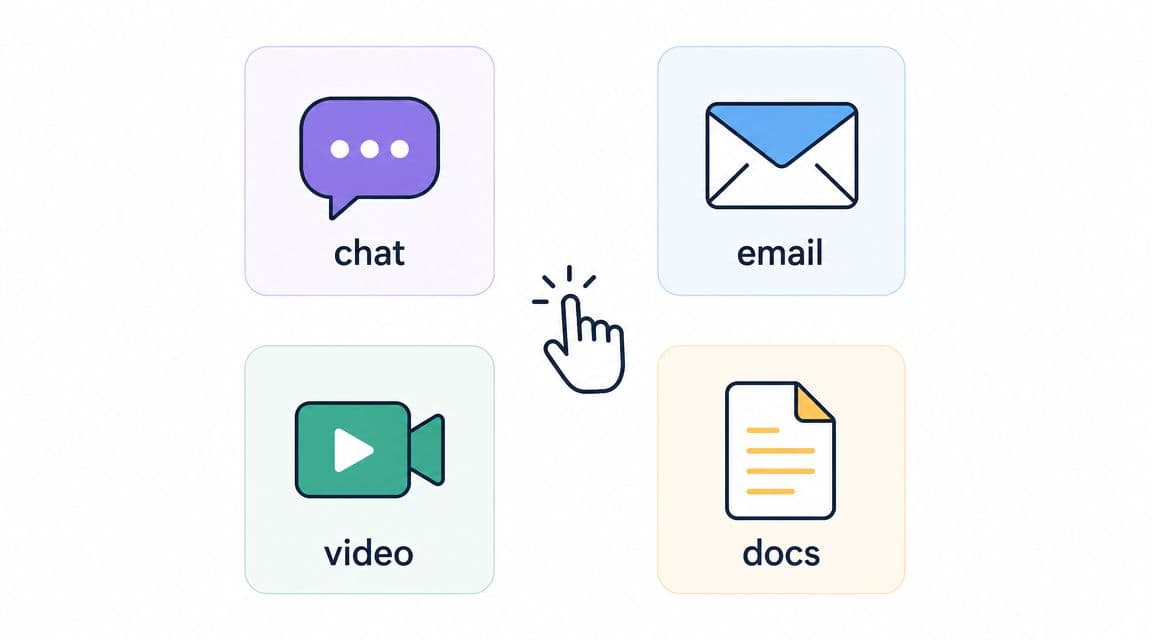
A great answer provides a clear framework. You could explain that you use Slack for urgent, quick queries, but shift to a documented format like a Notion ticket for complex issues that require a paper trail. You might use email for formal, external communication and a Loom video to provide visual context for a design review or bug report, respecting different time zones.
Showcasing your ability to adapt to the company's existing tech stack is also crucial. Explain that while you have your preferred tools, you are quick to learn and integrate into their established workflows.
4. Collaboration: “Describe a complex project where you worked with people outside your immediate team. How did you ensure alignment?”
This question probes your ability to work cross-functionally without a shared office. Employers want to see how you build relationships, manage dependencies, and maintain a shared understanding across different teams. Your answer demonstrates your skill in influencing without direct authority—a core competency for roles like those in remote project manager jobs.
A strong answer will detail a specific, complex project. For instance, a product manager might explain aligning sales, engineering, and design for a launch. You would describe the initial challenge, such as conflicting priorities between teams. Then, explain your coordination mechanisms, like creating a central Notion board for the project roadmap, assigning clear owners in a spreadsheet, and using weekly async standup videos to keep everyone informed without adding more meetings.
By highlighting how you established shared documentation and regular async check-ins, you prove your capacity to keep diverse, siloed teams moving toward a common goal, even when they are spread across the globe.
5. Security: “How do you protect sensitive company data when working from home? Walk me through your setup.”
This question tests your understanding of cyber hygiene in an unsupervised setting. Employers need assurance that you are a responsible steward of company and customer data, not a security liability.
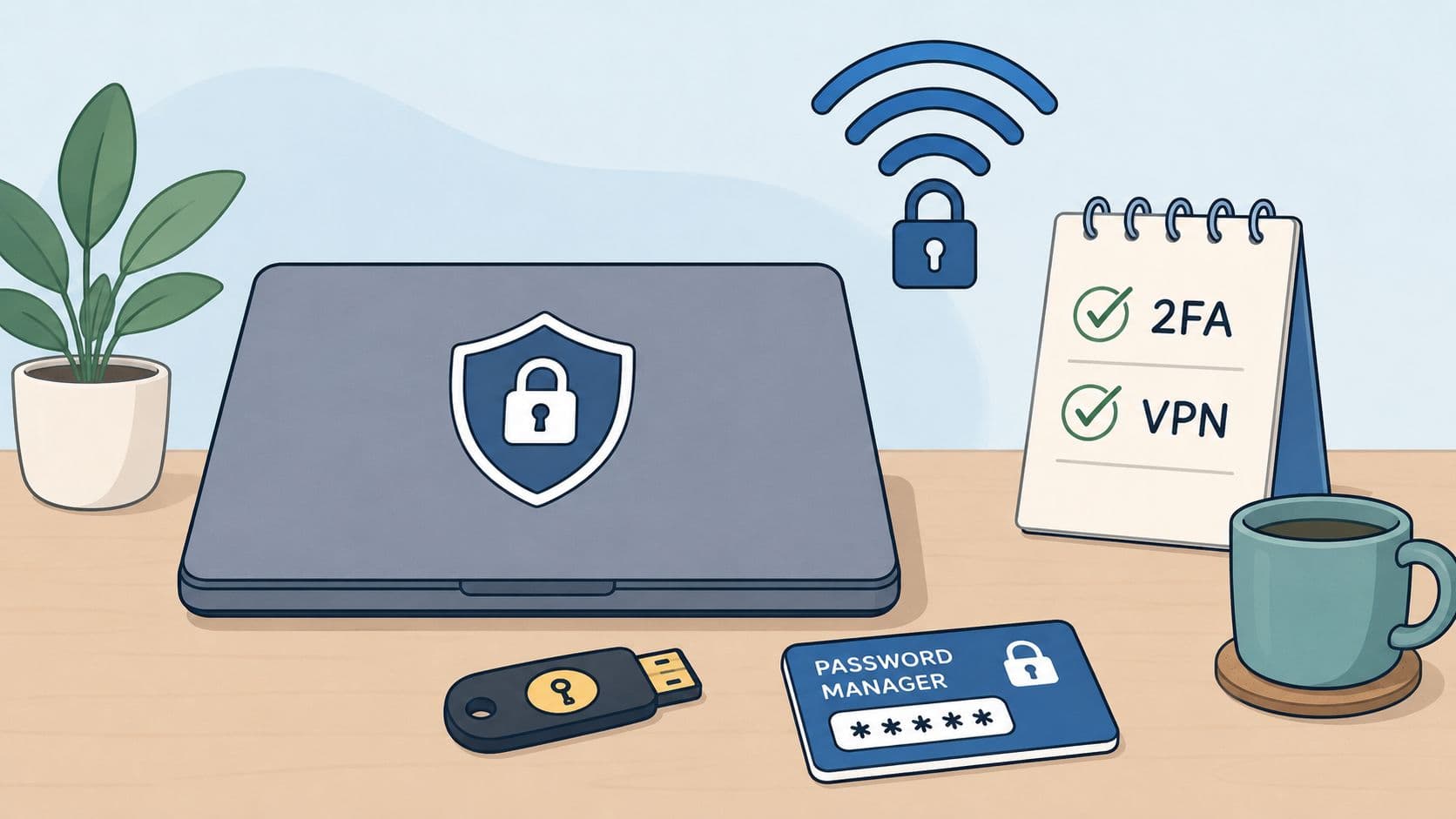
A strong answer details both digital and physical security measures. You might describe using a company-provided laptop exclusively for work, connecting through a VPN, and using a password manager like 1Password or Bitwarden for unique credentials. Mentioning multi-factor authentication (MFA) on all accounts, keeping software updated, and enabling disk encryption shows a layered security mindset.
Physically, you could explain that you work from a private room, lock your screen when you step away, and avoid public Wi-Fi for sensitive tasks. This demonstrates that you view security as a personal responsibility, not just an IT department problem.
6. Availability: “What are your preferred work hours, and how do you handle time zone differences?”
While remote roles offer flexibility, companies need predictability and effective collaboration. How you answer shows your understanding of aligning with a team's core operational hours, your personal time management discipline, and your strategy for bridging geographical divides.
A strong answer provides specifics and shows flexibility. You should state your local time zone and the core hours you can consistently commit to. For instance, an engineer in Europe might commit to a 9 AM to 12 PM PST overlap for synchronous meetings with a U.S.-based team, reserving their afternoons for focused, asynchronous work.
Mention how you use tools like Slack statuses and shared calendars to signal your availability. Honesty about your schedule prevents future burnout and sets realistic expectations from the start.
7. Culture-Fit: “What does 'remote culture' mean to you, and what kind of team environment brings out your best work?”
Hiring managers want to understand if you thrive with autonomy and asynchronous work or if you need more structured, synchronous interaction. Your answer reveals your expectations for team connection, communication norms, and personal accountability in a distributed environment.
A great answer is honest and reflects prior research into the company's culture. You might explain that for you, remote culture means trust and autonomy, allowing for deep, focused work with minimal interruptions from constant meetings. Alternatively, you could highlight the importance of intentional virtual bonding and transparent documentation. For more insights into building a strong remote career, explore the RemoteFast blog.
Discussing how you set boundaries between your work and home life also demonstrates maturity and an understanding of remote work challenges.
8. Problem-Solving: “Tell me about a time you solved a significant problem without direct manager input. What was your approach?”
Managers in remote settings are not always available for real-time guidance, so they must trust you to navigate challenges autonomously. Your answer demonstrates your decision-making framework, your ability to stay calm under pressure, and your ownership of outcomes.
A powerful answer follows the STAR method with a remote-specific twist. Explain the situation and why your manager was unavailable, such as a time-zone difference or an urgent off-hours issue. Detail the specific actions you took: consulting documentation, analyzing data or logs, collaborating with a peer, or using a specific tool to diagnose the root cause.
Finally, discuss the positive result and how you communicated your actions to your manager and team afterward. Highlighting how you sought validation for your solution after implementing the fix demonstrates both confidence and a collaborative spirit.
9. Time Management: “How do you maintain focus and avoid context-switching in a remote environment with constant notifications?”
Employers need assurance that you can achieve deep work and stay productive without direct supervision, especially when faced with digital distractions and household interruptions.
A strong answer showcases a clear system. You could describe using the Pomodoro Technique for focused sprints, combined with a tool like Forest to stay off your phone. You might explain how you batch-check Slack notifications twice a day instead of reacting instantly, or how you use calendar features like “Focus Time” to block off heads-down periods. Communicating your availability, such as setting async hours in your status, is also key.
By explaining your specific techniques for both technical and environmental distractions, you prove you can perform at a high level, prevent burnout, and thrive in a remote-first culture that values focused, asynchronous progress.
10. Onboarding: “How do you typically get up to speed in a new role? What support do you need, and what can you figure out independently?”
Employers use this to assess whether you are a self-directed learner who can find answers independently before asking for help. Your response shows how you balance resourcefulness with knowing when to seek support.
A strong answer outlines a proactive, structured approach. You might start by explaining that you prioritize self-directed learning by thoroughly reviewing documentation, exploring the codebase or design systems, and observing existing team workflows. You would also mention a plan to schedule brief, informal coffee chats to build relationships with colleagues asynchronously.
Your strategy should show you respect your team's time by attempting to solve problems first but are not afraid to ask specific, well-researched questions when blocked. Mentioning that you create personal reference documents as you learn also shows a commitment to reinforcing your knowledge and contributing back to the team. Explore other opportunities on our remote job collections board.
Remote Interview Questions: 10-Point Comparison
| Competency | Complexity | Resources | Expected outcomes | Ideal use cases | Key advantages |
|---|---|---|---|---|---|
| Communication | Medium — coordination + documentation | Collaboration platforms, async docs, occasional video | Clear requirements, fewer misunderstandings | Clarifying ambiguous specs across time zones | Reveals async clarity, documentation habits |
| Self-Management | Low — behavioral evaluation | Examples, honesty, reference checks | Accountability, improved estimates, proactive escalation | Assessing autonomous, remote-first workers | Shows ownership, learning from mistakes |
| Tools & Tech | Medium — tool selection & integration | Slack, Notion, Loom, Figma, automations | Efficient workflows, reduced tool noise | Async collaboration roles | Verifiable practical skills, adaptability |
| Collaboration | High — cross-team coordination | Shared docs, roadmaps, stakeholder time | Aligned multi-team delivery | Complex cross-functional projects | Demonstrates stakeholder management |
| Security | Medium — technical + policy practices | VPN, password manager, MFA, encryption | Reduced breach risk, compliance readiness | Roles handling sensitive data | Shows responsibility and policy alignment |
| Availability | Low — scheduling clarity | Calendar tools, core hours, overlap windows | Predictable coverage, reliable meeting overlap | Roles requiring synchronous collaboration | Clarifies scheduling fit |
| Culture-Fit | Medium — subjective assessment | Culture docs, examples of past fit | Better retention, smoother onboarding | Remote-first values alignment | Predicts long-term engagement |
| Problem-Solving | Medium — autonomous decision-making | Docs, logs, peers, escalation channels | Faster independent resolutions | Roles needing independent judgment | Shows initiative, analytical approach |
| Time Management | Low — practices and routines | Calendar blocking, focus tools, DND | Sustained focus, less context-switching | Deep-work roles | Demonstrates sustainable productivity |
| Onboarding | Medium — structured ramp-up | Documentation, mentors, onboarding plan | Faster ramp, clear support expectations | New hires on distributed teams | Predicts learning velocity |
Your Turn to Ask: Questions to Vet a Remote Employer
The interview process is a two-way evaluation. While you demonstrate your qualifications, you must also determine if the company and its remote structure align with your career goals and work style.
Mastering answers about self-management, asynchronous communication, and security is only half the battle. The other half is gathering the intelligence you need to make an informed decision. An organization genuinely committed to remote work will have clear, thoughtful answers to your inquiries. Vague responses are significant red flags.
For example:
- How do you measure success and productivity for this role in a remote setting?
- What does your onboarding process for new remote employees look like?
- Can you describe the team's approach to asynchronous versus synchronous communication?
- How does the team build rapport and connection when not sharing a physical office?
By preparing your own set of insightful questions, you shift the dynamic from a simple interrogation to mutual discovery. Your goal isn't just to get an offer; it's to secure the right offer with a company where you can truly thrive.
Now that you're prepared to ace your next interview, find your ideal role on RemoteFast. Our platform features curated remote jobs with transparent details so you can focus your search and connect with companies that value your skills.